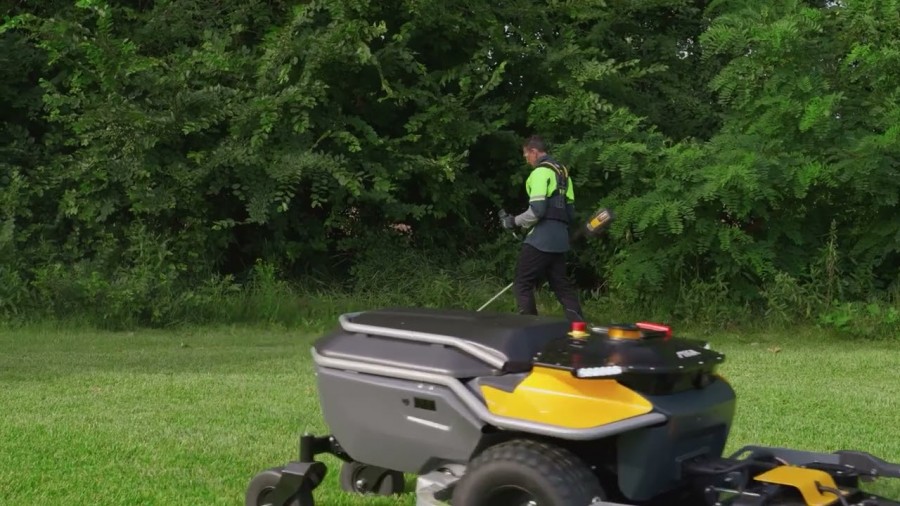
How can green space maintenance be made ecologically sound and practical at the same time, without losing sight of functional requirements?
This question was the focus of a discussion round to which AS-Motor invited representatives from science, practice and the trade press.
The initiative was prompted by AS-Motor's long-standing commitment to ecologically oriented green space maintenance. Since the public debate surrounding the Bavarian referendum "Save the Bees" in 2019, mulching technology has also come under increasing criticism.
For AS-Motor, this was an opportunity to critically examine its own role as a equipment manufacturer and to take a closer look at the ecological impact of different maintenance decisions. The discussion panel picked up on this and brought together perspectives and experiences from science, practice and the media.
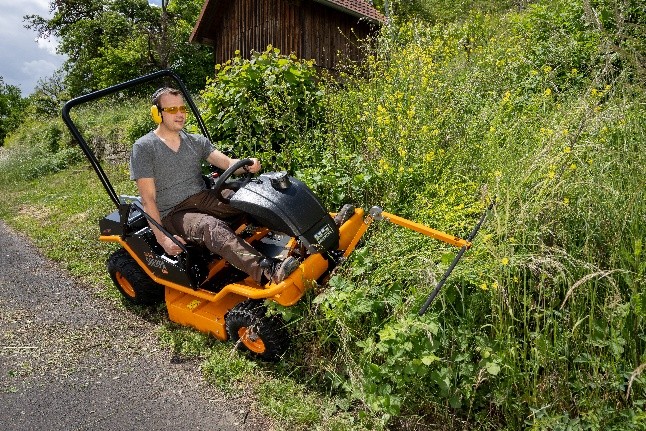
The discussion made it clear that there is no single goal for ecological green space maintenance. Instead, there are several ecological targets, including the preservation of biodiversity and the protection of biotope networks and landscape connectivity. Maintenance always takes place within clear framework conditions, for example with regard to traffic safety, legal requirements, economic efficiency and social acceptance. Prioritisation is unavoidable. Maintenance must be planned on an area-specific and target-dependent basis.
Areas with low usage but high connectivity are of particular ecological importance. These include roadside greenery, field margins, forest edges, orchard meadows, municipal green spaces and private gardens. Linear structures in particular play a central role in the biotope network.
There was agreement that non-maintenance is not a viable option. As cultural landscapes, many areas depend on targeted maintenance to prevent scrub encroachment and loss of species and function. The timing of mowing, mowing frequency, cutting height, area division and rotating and mosaic-like maintenance approaches are crucial. Alternating maintenance was considered particularly practical: intensively maintained areas where necessary and extensively maintained, deliberately staggered sub-areas in adjacent areas.
The role of technology was also considered in a differentiated manner during the round table discussion. Machines are a means to an end, not the solution itself. Bar mowers can offer advantages in terms of nature conservation, but are not economically viable or suitable for use in all areas due to terrain conditions. Mulchers and rotary mowers can be ecologically beneficial when used appropriately. It is not only the type of machine that is crucial, but the entire maintenance concept and its consistent implementation.
In practice, it has also been shown that ecologically oriented green space maintenance does not necessarily entail higher costs. Reduced mowing frequency can offset additional expenses. Challenges remain in the disposal of clippings and limited investment opportunities in new technology.
Communication has been identified as a key factor. Conflicts often arise less from technical reasons than from aesthetic expectations. Areas that appear unfamiliar or untidy are met with rejection without explanation. What is crucial is explanatory, continuous communication that creates understanding and highlights positive examples. The model of "orderly unrest" was mentioned several times in this context.
The role of employees is equally central. Change can only succeed with the people who carry out the maintenance. Knowledge, involvement and appreciation promote responsibility and motivation. Many practical solutions arise directly from experience in the field.
In the discussion, AS-Motor was perceived not only as a manufacturer of equipment, but also as a source of knowledge and a catalyst for professional exchange. Training courses, practical guidelines, tried-and-tested practical solutions and the further development of technology with a view to ecological application were identified as useful starting points.