The number of children and young people playing sport and taking part in physical activity in England is at the highest level since Sport England started the Active Lives Survey in 2017-18.
The latest Active Lives Children and Young People Survey Report shows that there are more than half a million (580,000) more children meeting the Chief Medical Officers’ (CMO) guidelines of taking part in an average of 60 minutes or more of sport and physical activity every day than there were seven years ago – an increase of 5.8%.
This reflects significant progress, especially considering the huge disruption caused by the Covid-19 pandemic, and is testament to the hard work of schools, sports clubs and many organisations across the sport and physical activity sector.
However, the report also shows that less than half of all children (49.1%) meet the CMO’s guidelines and that significant inequalities remain – underscoring how much there is still to be done to ensure every child in England enjoys the physical and mental health benefits of taking part.
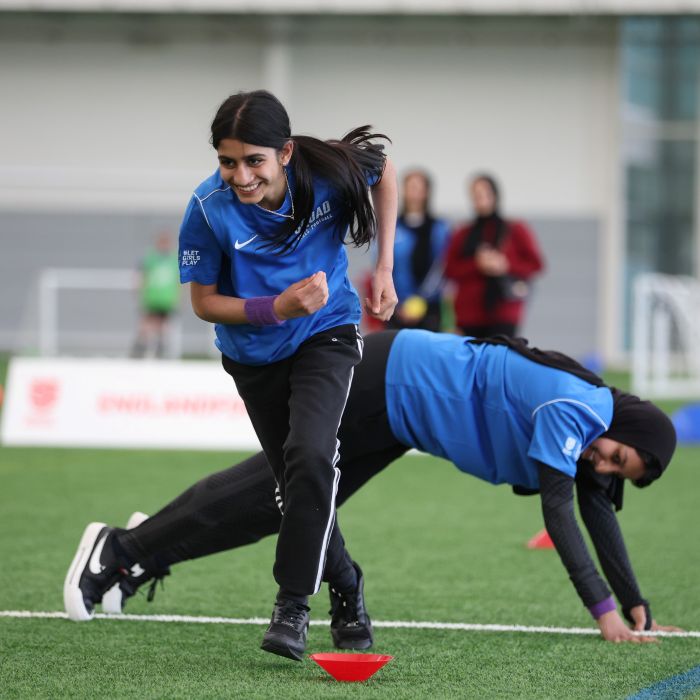
The findings reinforce that participation in sport and physical activity varies greatly among different demographic groups.
Significant inequalities remain in activity levels, with Black (41%) and Asian (43%) children and young people, and those from the least affluent families (45%), still less likely to play sport or be physically active than the average across all ethnicities and affluence groups.
Girls (46%) are also less likely to be active than boys (52%), and the gender gap is widest between boys and girls from Asian (11.2%), Black (10.6%) and other (12.5%) ethnic groups.
With White British (51%) and White Other (53%) children’s activity levels increasing at a faster rate, the gap by ethnic group has widened over the past 12 months.
Children and young people from the least affluent families are the least likely to be active, with only 45% meeting the CMO guidelines, compared to 58% of those from the most affluent families.
Whilst those from the most and mid-affluence families have seen increases over the last two years, those from the least affluent families have not, indicating inequalities have widened in the short term.
Simon Hayes, Chief executive of Sport England, said: “The findings are encouraging. Children’s activity levels are now the highest since the Active Lives Survey began, reflecting the positive impact that schools, clubs, community organisations, and many others are having across the country.
“More than half a million additional children are now meeting the Chief Medical Officers’ guidelines. That is real progress and something the sport and physical activity sector can be proud of, especially after the huge disruption of the pandemic.
“But the report also makes clear how much more we must do. It cannot be right that fewer than half of children are moving as much as recommended, and that stark inequalities mean too many amongst the poorest in our society miss out. We need a renewed national effort to change this.
“At Sport England we remain committed to working with all our partners to ensure that every child in England can enjoy the physical, social and mental benefits of an active life, wherever they live and whatever their background.”
The latest Active Lives Children and Young People Survey Report also explores some of the outcomes of being physically active and why being active is so beneficial to the child.
There’s a positive association between levels of engagement in sport and physical activity and levels of mental wellbeing.
Mental wellbeing scores (based on a happiness scale of 1-10) are higher for those who are active (7.1) than those who are fairly active (6.9), which in turn are higher than for those who are less active (6.7).
Active children and young people (38%) are also more likely to strongly agree with the statement ‘if I find something difficult, I keep trying until I can do it’ than those who are fairly (31%) or less active (29%).
Active children and young people (26%) are more likely to strongly agree they can trust people of a similar age to themselves, than those who are fairly (24%) or less active (23%).
Since March 2022, Sport England has invested more than £600 million in over 130 long-term partnerships, recognising the vital role partners play in creating positive experiences for young people, whether as participants, leaders, coaches or volunteers. Partners include national governing bodies of sport, the Youth Sport Trust, UK Youth, Active Partnerships and StreetGames.