The National Drought Group has moved to weekly meetings as drought conditions continue to intensify, despite the recent rainfall.
The move marks a further step change in the government’s response to the continued threat posed by wildfires and drought and follows the COBR meeting, chaired by Prime Minister Andy Burnham.
The expert group - which includes the Met Office, government, regulators, water companies, farmers, Canal & River Trust, anglers, and conservation experts – met this afternoon as part of the heightened response to help safeguard people, livelihoods, and our environment. They focused on the current drought and weather situation, actions each sector is taking and will continue to take over the coming months.
The whole of Wales is also covered by drought restrictions. This week, as the heatwaves and drought conditions continue to place untold strain on Wales’s rivers, Natural Resources Wales (NRW) has applied to the Welsh Government for a Drought Order on the River Severn.
If granted, the Order would reduce the minimum amount of water required by law in the River Severn, which is regulated year-round by releases from Llyn Clywedog and Lake Vyrnwy reservoirs, as well as groundwater sources. The Environment Agency in England has also applied for a related Drought Order for the Severn in England.
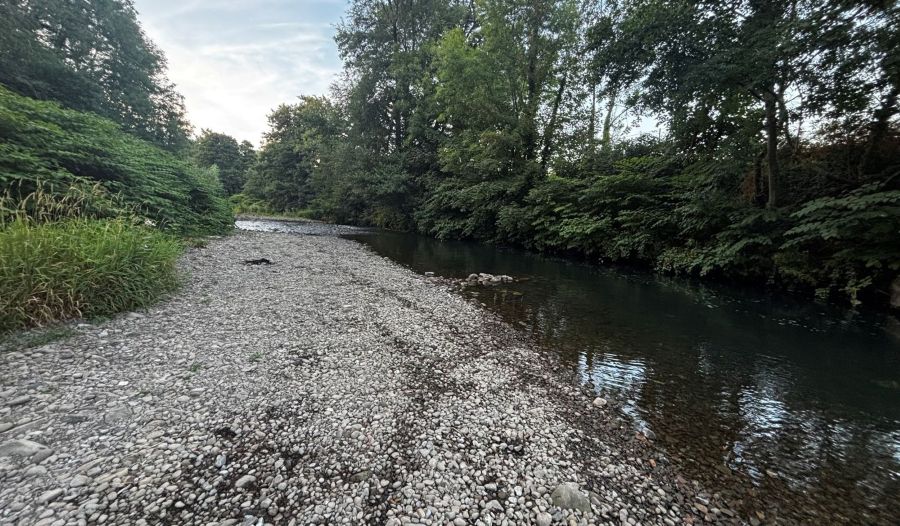
Image: River Ebbw, NRW
Last week, a £65million package was announced to help farmers while significant work also continues on climate adaptation, including increased flood funding and nine new reservoirs.
Rural Communities Minister, Jenny Riddell-Carpenter, said: “These have been some of the driest conditions in decades, and l have seen the impact it is having on communities, and I know the real pressure on farmers and the environment.
“We have acted in lock-step with fire services, local authorities and across government to provide support and protect people and nature.
“Drought conditions are worsening and yet we now face the risk of flash flooding. As extreme weather becomes more frequent, this government is working to adapt to our changing climate - including through our work with the National Drought Group and building nine new reservoirs to secure future supplies.”
This week has seen rainfall and cooler temperatures which, while welcome, will not make any significant impact on our water resources.
Almost three-quarters (71.3%) of England is in drought, and it will be later this year before we see meaningful signs of recovery.
Drought is only over once rivers, reservoirs and groundwaters are completely replenished. This can take months of significant and sustained rainfall, while the impacts on our wildlife can last for years.
There is also currently a risk of surface water flooding, which can arise from heavy rain running off the hard ground rather than being absorbed by the soil.
The government is investing at least £10.5 billion by March 2036 to construct new flood and coastal erosion schemes and repair existing defences.
Meanwhile, the EA has completed 250 projects in the last two years, meaning almost 62,000 properties are better protected from flooding.
Environment Agency Chief Executive, Philip Duffy, chaired the National Drought Group and said: “This summer has been extremely challenging for farmers and for wildlife, and the rain we have seen this week is desperately needed.
“This current rainfall isn’t enough to change the overall drought picture, and it is possible to have simultaneous drought and flood as heavy rain falls on compacted soils.
“We are monitoring the flood risks, while also working with industry, agriculture, and the government on the ongoing drought response.
“In the meantime, we really do need everyone’s help make our current water reserves last. Every drop saved is an extra drop for your local river, lake, or farmer.”
No new areas have moved into drought status today - with the south and midlands in drought and the north remaining in prolonged dry weather.
The driest July in 190 years, a dry start to August, and five widespread heatwaves have resulted in rapidly diminishing river and reservoir levels over the summer.
The weather has also had a marked impact on soil moisture, which is essential for the recharging of groundwaters and vital for agriculture. There is always a delay of a couple of months for soils to respond to any rainfall.
Dr Katie Facer-Childs, senior hydrologist at the UK Centre for Ecology & Hydrology (UKCEH), said: “After this exceptionally hot and dry summer, it will take several months for river flows and reservoirs to get back to normal. A little rain will not end the drought.
“Autumn and winter is a crucial period for replenishing our water resources. If this autumn is wetter than normal, river flows may recover by December, but current forecasts suggest this is unlikely and river flows will therefore generally remain low into the new year, especially in the south east.
“A dry winter could leave parts of the UK vulnerable to drought again next year.”