When a client commissions a makeover for their outdoor space, they usually have a purpose in mind.
Whether they want to use it for lounging or entertaining or as a place for children to play and spend time in nature, it is vital, as the expert, to uncover their vision.
“Planning is heavily affected by the client’s aspirations, as the last thing they want is a garden that doesn’t fulfil their needs,” warns landscaping and gardening expert and TrexPro composite decking installer, Simon Parry.
“Once you understand their desires, creating zones for different activities makes the difference between a bland, one-note garden and a truly functional space that your client will want to spend their time in.”
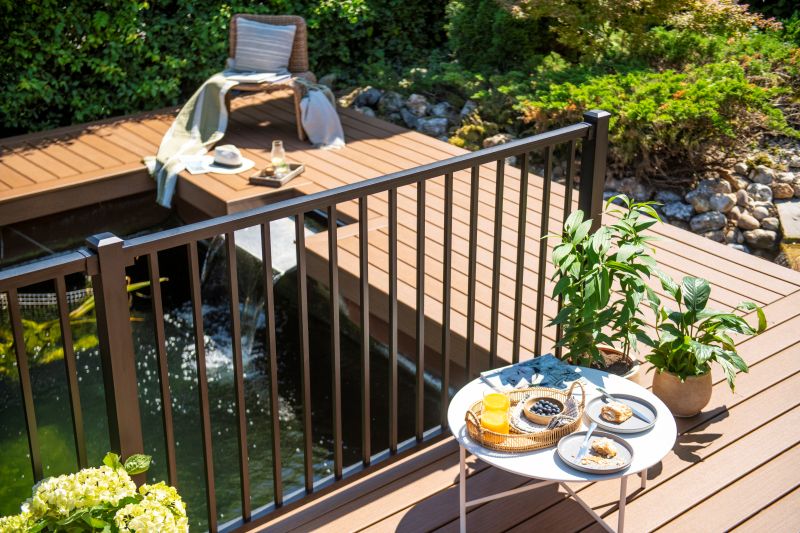
Here are Simon’s tips for creating zones in an outdoor space:
Decks
A deck is one of the best ways to create a physical boundary between different zones in a garden or outdoor space due to the obvious change in flooring materials and the wide variety of ways in which they can be built. As well as allowing greater design creativity than a patio, a properly built deck will also last longer.
Trex, the world’s leading composite decking brand, is a high-quality, low-maintenance option to offer clients. Splinter-free, rot, decay, mould and mildew-resistant, Trex boards are backed by 25-50 year limited residential warranties.
The obvious change in height created by a raised deck makes it a particularly effective way of creating a defined zone. For projects involving a raised deck, including Trex, an under-deck drainage system, as part of the build will keep the space beneath it dry – perfect for additional storage or an extra outdoor seating area.
Railing and hedges
Vertical structures, such as railing and hedges, are other ways to highlight specific zones in an outdoor space. Railing options are available to suit every garden style, including glass, composite or timber railing, as well as Trex aluminium railing, which creates a sleek design. Likewise hedging can be formal or relaxed in line with the style of garden.
Pathways
A pathway is one of the most obvious ways to separate different garden zones, with the change in surface material signalling to users that they have entered a new space. Using hard materials such as tiles, decking or block paving for pathways close to the house and natural, softer materials like gravel or woodchips near planted areas will make the transition to a new zone feel seamless rather than jarring.
To add a visual interest, consider using different levels or curves with your pathways, which can also be achieved with Trex decking.
Subtle zoning techniques
More subtle zoning options you can recommend to a client include:
Lighting
Lighting such as spotlights, lanterns, wall sconces and decking lights can create gently-defined perimeters for different zones, as can including recessed lights in your deck or lining a path with bollard lights.
Built-in furniture
Another subtle zoning method is including built-in furniture as part of a garden or deck, using it to either separate existing zones, create a new one, or both, such as through an L-shaped bench would create places to sit outside while acting as a natural corner for an area.
Colours
Finally, it is also worth considering how colour can be used to define zones, whether by using similar or toning colours to create a cohesive space, or contrasting colours to separate one zone from another.
For more information on Trex, visit uk.trex.com