The government has published England’s first ever Land Use Framework – a plan for delivering new homes, nature restoration, clean energy and food security.
It demonstrates clearly that there is enough land to deliver the government’s objectives provided we use land more efficiently and for multiple benefits.
The Framework gives the long-term clarity needed to meet environmental commitments and the policy to back it up, with a single spatial map of England’s natural assets showing where nature recovery can have the greatest impact.
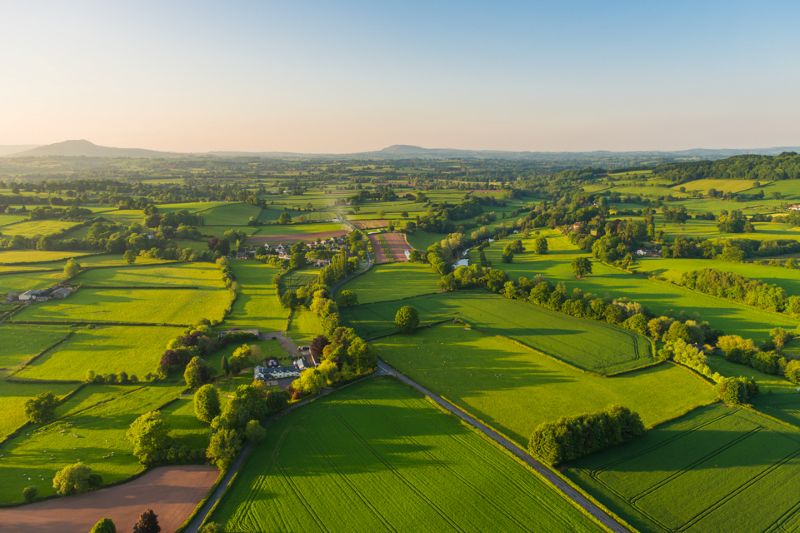
Environment Secretary Emma Reynolds, in a speech at the Royal Institute of Chartered Surveyors, said: “Our land is a vital national asset, but it is finite. We cannot be held back by the false choices between building homes and producing food, restoring nature and supporting farmers, or delivering clean energy and protecting landscapes.
“With better data, smarter tools and strategic planning, we can meet all these needs. This ensures people can manage their land in the way that works best for them while unlocking growth, strengthening food security and protecting our environment.
“The government’s new Framework gives decision-makers a single, shared vision for how we can play to the strengths of our diverse landscapes. This will help landowners, planners and energy providers to make effective decisions about where we locate new infrastructure, bolstering the country’s resilience to both short-term shocks and long-term vulnerability to climate change.”
Over the next year, the government will establish a dedicated Land Use Unit to drive delivery of the Framework and produce England’s first single map of national spatial priorities for Defra. Alongside more effective spatial planning for infrastructure and growth, this will align national and local strategies, accelerate decision-making and give more certainty to investors and developers.
The Horticultural Trades Association (HTA) has welcomed the publication Jennifer Pheasey, Director of Policy & Public Affairs at the HTA, said: “We welcome the Land Use Framework and its recognition of the essential role that horticulture, gardens and green spaces play in supporting climate resilience, biodiversity and public wellbeing. From managing flood risk to cooling our towns and cities, our sector is already delivering practical solutions to some of the UK’s biggest challenges.
“The commitment to develop a dedicated horticulture growth plan is particularly welcome, providing it includes all elements of production and not just food production. It is critical that we have strong presence and input from environmental horticulture in its development. This presents a real opportunity to strengthen domestic production, improve resilience, and unlock the full economic, environmental and social value of our sector.
“We are also pleased to see the importance of gardens and community green spaces acknowledged. With almost 5% of England made up of gardens, the contribution of growers, gardeners and local communities is significant. As the government seeks to build 1.5 million homes, it is now more important than ever that gardens and green spaces are considered as part of this. To ensure our communities are future-ready, we ask that all new developments incorporate at least 29.5 per cent space for garden density to maintain the current proportion of Britain’s urban residential gardens.
“We now call on the Government to ensure that the HTA and our members across the environmental horticulture sector are actively involved in shaping the next phase of this work. Our expertise across plants and trees, landscaping, urban greening and community initiatives can help deliver practical solutions on the ground.
“This framework is an essential foundation, but delivery matters. For businesses to thrive, we need the right conditions in place - from access to labour and affordable energy, to investment support and a planning system that enables growth.”
The Land Use Framework was developed after extensive public consultation, which began last January, and including regional roadshows as part of a national listening exercise.
Meanwhile, the EFRA Committee has launched a long-term thematic inquiry into land use and nature in England, as a new component of its Strategy.
EFRA Committee Chair Alistair Carmichael MP said: “The Government has set ambitious targets to conserve ecosystems, build hundreds of thousands more homes and new renewable energy sources, and to expand the National Grid. Given that around 70% of England’s land is agricultural, it is farmers and growers – already under pressure – that are most likely to be impacted by these priorities.
“Squaring all of the above will be a tricky balancing act that requires detailed, thought-through policy. In many cases there could be winners and losers, and we know these subjects can be potent at stirring up emotions.
“At its early stages and through its implementation, this Committee will scrutinise the Government’s strategic planning for land use and nature conservation, and will examine how DEFRA works with other departments to ensure the aims of the Land Use Framework are understood and achieved.”