The public are being urged to be vigilant for any sightings of oak processionary moth caterpillars, a tree pest of oak trees.
The caterpillars – predominantly found in South East England – descend down oak trees in head-to-tail procession, earning them their name. They feed on the leaves as they move which can negatively impact the oaks growth. This can weaken the tree and leave it more vulnerable to other stresses, such as diseases.
The warning has been issued today by the Forestry Commission who are urging the public to report any sightings via the TreeAlert portal or by email to opm@forestrycommission.gov.uk, including a photo and location.
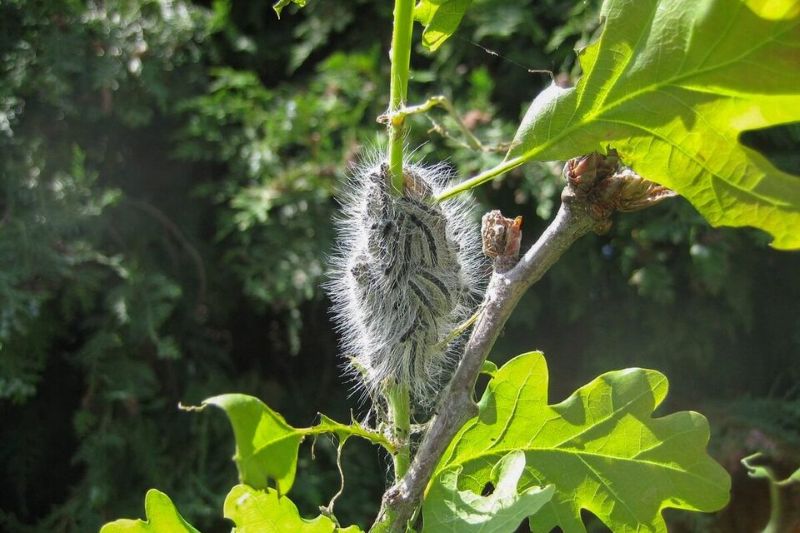
Oak processionary moth caterpillars are covered in long hairs that can cause itchy rashes, eye and throat irritation and should not be touched under any circumstances. They also form silky white nests, ranging in size from as small as a 50 pence piece up to a melon. These nests discolour over the season, appearing dirty and brown by August. The nests also contain the hairs, and similarly should not be touched. The nests can be found on the trunk or the underside of branches of oak trees. Members of the public are urged never to try and remove or dispose of the nests themselves.
Forestry Commission Oak Processionary Moth Programme Manager Dr Edward Straw said: “The warm weather in spring has led to oak processionary moth growing quicker than in previous years and we may see higher infestation levels.
“It is important those living and working in areas affected by oak processionary moth remain vigilant in particular.
“The Forestry Commission has a whole host of information online that can be used to identify the moth, simply visit managing oak processionary moth in England. If you spot the pest, report the sighting via.”
Professor Nicola Spence, Defra Chief Plant Health Officer, said: “Oak trees are an iconic and much-loved part of our British landscape. By reporting any sightings of oak processionary moth to the Forestry Commission, we can all minimise the pest’s spread as well as reduce their impact on tree health.
“I would advise that members of the public living in the South East, Derbyshire and Dorset, avoid any contact with the caterpillar and its nests, as this can cause irritation.”
Oak processionary moth was first identified in London in 2006 after being accidentally transported over from Europe in trees for planting. It has since spread to surrounding counties in the South East of England, and the Forestry Commission is presently managing two outbreaks outside of the South East in Derbyshire and Dorset.
The Forestry Commission continues to undertake a management programme and extensive surveillance work is in place to monitor the area and continue to direct appropriate control measures to prevent the potential spread of oak processionary moth.